ERA 2025: What You Actually Need to Change
The Employment Rights Act 2025 has now been passed, and if you've been reading the headlines, you might think the sky is falling. Phrases like "the biggest shake-up in employment law for decades" don't exactly calm the nerves.
Here's the reality: ERA 2025 is significant, but not every business needs to panic. Many changes are being phased in from 2026 onwards, and what matters most is whether your handbook is ready.
Let's break down what you actually need to change.
If you want the comprehensive reference on every provision in the Act, our Employment Rights Act 2025 guide covers the full timeline, all five change categories, and the underlying legislation. This post is the shorter, opinionated version: what to prioritise, what to ignore, and what to do this quarter.
The Big Changes (You Definitely Need to Act)
1. Flexible Working (Strengthened Day-One Rights)
Employees already have a day-one right to request flexible working, but ERA 2025 strengthens the framework around how employers must handle those requests.
What to update:
- Remove any service-length requirements from your flexible working policy
- Ensure timeframes reflect the two-month response requirement
- Review your internal process for handling and documenting flexible working request decisions
This is one of the most visible changes — employees will expect clarity.
2. Fire and Rehire Restrictions
The use of "fire and rehire" tactics — dismissing employees and offering re-engagement on worse terms — is now significantly restricted.
What to update:
- Review any policies covering restructures or contractual changes
- Check redundancy wording for alignment with consultation expectations
- Consider adding explicit language around fair process and alternatives
If you've ever considered this approach, you should tread very carefully.
3. Zero-Hours Contract Changes
ERA 2025 introduces new rights for zero-hours and low-hours workers to request guaranteed hours, after a qualifying period.
What to update:
- If you use zero-hours contracts, you'll likely need a new or revised policy
- Review casual worker documentation
- Ensure managers understand how requests must be handled
This won't affect every business — but where it does, it matters.
Smaller Changes (Important, But Less Urgent)
Statutory Sick Pay (SSP)
Reforms are expected to extend SSP entitlement from the first day of sickness, removing the waiting period. Implementation details are being phased in via regulations.
Action: Review your sickness absence wording so it's ready.
Stronger Protections for Pregnant Workers
Protections around pregnancy and maternity are being extended. If your policies already follow best practice, only minor wording updates may be needed.
Unfair Dismissal Qualifying Period Drops to Six Months
The qualifying period for unfair dismissal claims is dropping from two years to six months of service. This is the change with the biggest practical impact and the least media coverage.
What to update:
- Tighten your performance management process so it can withstand a tribunal at the six-month mark
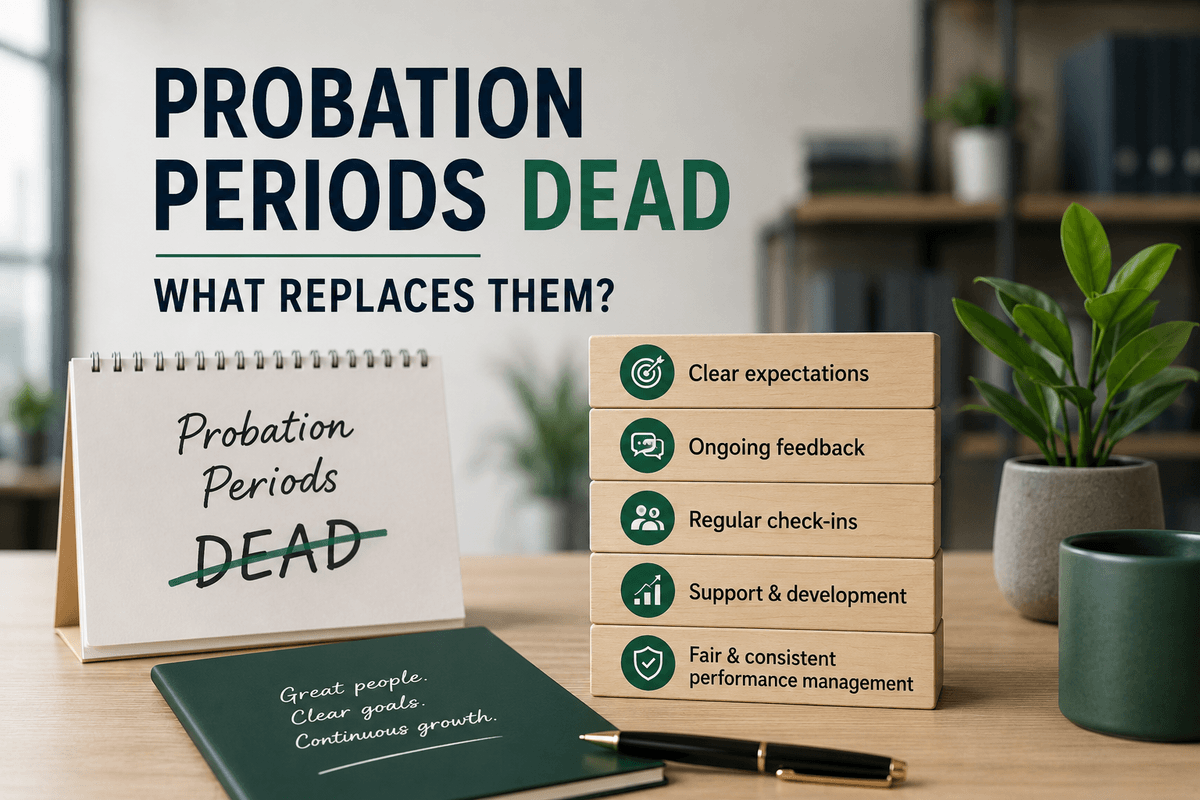
- Review your probation framework (which the law is also reshaping — see our probation periods post)
- Make sure managers know that "they're still in their first year" is no longer a get-out
If your performance management is currently informal, this is the one to fix first.
The Unfair Dismissal Compensation Cap Is Going
Currently, unfair dismissal compensation is capped (around £115,000 or 52 weeks' pay, whichever is lower). Under ERA 2025, that cap is set to be removed, likely from January 2027.
What this means:
- Exposure on senior or high-salary dismissals goes up sharply
- The economic case for getting dismissal procedure right gets stronger
- Insurance and indemnity arrangements may need reviewing
This is one to flag to your board rather than your handbook, but worth knowing.
A New Right to Bereavement Leave
ERA 2025 introduces a general right to bereavement leave, including for early pregnancy loss. Details will be set out in secondary regulations, but the right itself is now in law.
What to update:
- Add a bereavement leave policy if you do not already have one
- Review your existing compassionate leave wording for alignment
- Make sure managers are trained on the sensitivity of early pregnancy loss specifically
Most handbooks treat bereavement as a discretionary line in the wider leave policy. That is now under-specified.
What We Recommend
- Prioritise flexible working — this affects almost every employer
- Review fire and rehire — legal advice is essential here
- Check zero-hours arrangements — only if you use them
- Don't panic — work through your handbook systematically
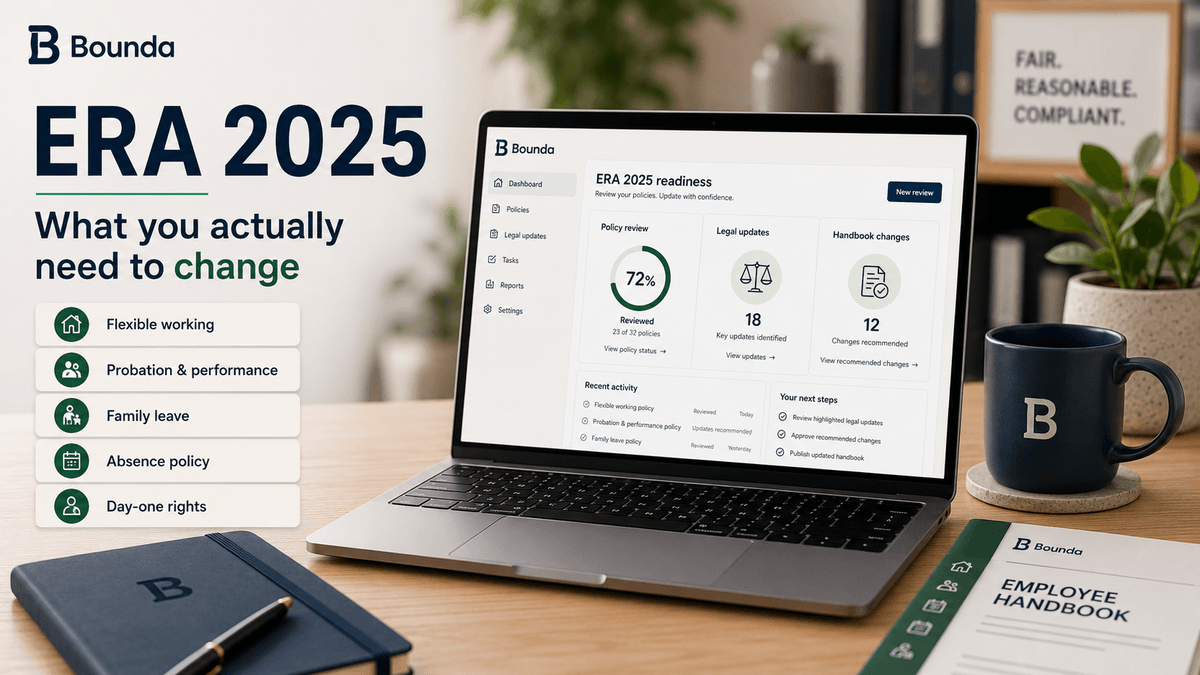
If you're a Bounda user, we've already updated our compliance analysis to reflect ERA 2025. Run a fresh check and we'll show you exactly what needs attention — and what doesn't.
Common questions about ERA 2025
When does the Employment Rights Act 2025 take effect?
The Act received Royal Assent in December 2025. Provisions are being rolled out in stages from April 2026 through to early 2027, with the unfair dismissal compensation cap removal expected last. The full timeline is in our Employment Rights Act 2025 guide.
Does ERA 2025 apply to small businesses?
Yes, most provisions apply regardless of headcount. The day-one rights (SSP, parental leave, bereavement leave) apply to all employers. The flexible working changes apply to all. There is no SME exemption for the unfair dismissal qualifying period change either.
Do I have to rewrite my entire employee handbook?
No. Most handbooks need targeted updates to specific policies (flexible working, sickness absence, parental leave, dismissal procedure) rather than a full rewrite. The fastest way to know which policies are affected is to run a compliance check.
Is the unfair dismissal "day one rights" rule actually happening?
No. The day-one unfair dismissal proposal was dropped during parliamentary debate. The qualifying period drops to six months of service, not to zero. Several news pieces still refer to the original day-one proposal; treat them with caution.