The Flexible Working Request You Can't Legally Refuse Anymore
A friend who runs a small design agency asked me, half-joking, "If everyone asks to work from Bali, do I have to say yes?" The answer is more interesting than it sounds.
Flexible working has quietly become one of the most litigated areas of UK employment law, and most SMEs are still treating their policy as a copy-paste afterthought. That's a problem, because the ground has shifted three times in two years and the direction of travel is one-way.
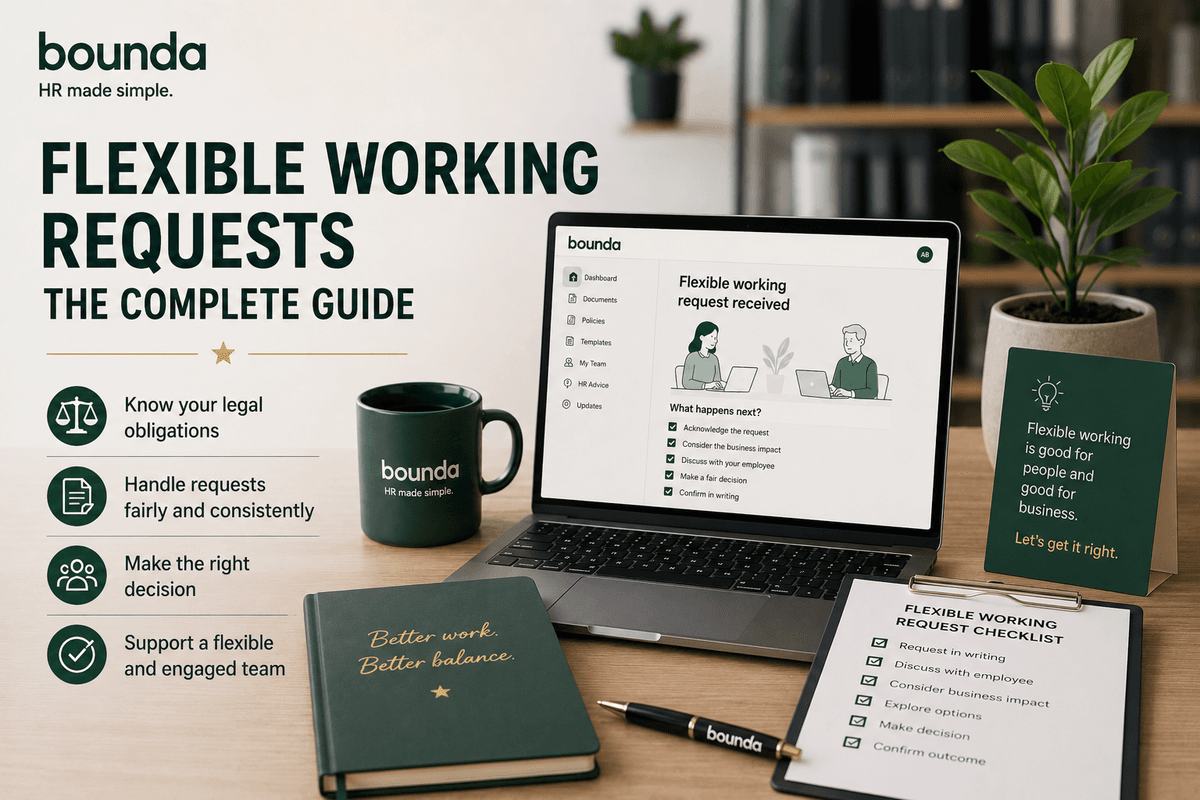
If you're looking for the step-by-step process rather than the commentary, that's in our complete process guide. This piece is the editorial take on what most refusals get wrong.
Where We Actually Are
Flexible working is a day-one right. That happened in April 2024 and most handbooks still haven't caught up. The old "26 weeks of service" line in your policy is wrong. Delete it today if it's still there.
Employees can now make two requests in any 12-month period (up from one). You have two months to decide (down from three). And you have to consult before refusing, which is the bit most employers miss entirely.
That consultation requirement is where claims are being won. A refusal without a documented consultation meeting is a procedural failure on its face, regardless of how good your business reasons are.
The Eight Reasons, And How They Actually Work
You can still refuse a request, but only on one of eight statutory grounds. Cost, ability to meet customer demand, inability to reorganise work, inability to recruit, impact on quality, impact on performance, insufficient work during proposed periods, and planned structural changes.
Here's what nobody tells you: tribunals don't just check that you cited a reason. They check whether you tested it. "Impact on customer demand" with no data behind it is a losing argument. "Impact on customer demand" with three weeks of trial data, customer feedback notes, and a documented review meeting is defensible.
The bar isn't "you were right." The bar is "you took it seriously."
What a 2026-Grade Flexible Working Policy Includes
- A clear request route. Email to a named person or role, with a template the employee can use. Not "talk to your manager," which dies in the weeds.
- A 14-day acknowledgement commitment. Not statutory, but it sets the tone and creates internal accountability.
- A consultation meeting as default, not exception. Written invitation, right to be accompanied, agenda shared in advance.
- A trial period clause. The single most underused tool in flexible working law. You can agree a 3-month trial without committing to a permanent change. It de-risks the decision for both sides and gives you real data instead of speculation.
- Written outcome with reasoning. Even an approval needs to be in writing, because the variation to contract has to be documented.
The Bali Question
Can someone request to work from another country? Yes. Can you refuse? Yes, almost always, because of tax residency, immigration, and data protection consequences that genuinely affect your business. But you have to actually demonstrate those consequences, not just assert them. A two-line refusal saying "we don't allow international working" won't survive a well-prepared claim.
The Honest Take
The interesting shift in 2026 isn't the legal framework, it's the cultural one. Employees increasingly expect flexible working to be the default conversation, not the exception. Companies still running flexible working as a grudging concession are going to lose talent quietly for years before they realise why. The policy is a hygiene factor. The culture is the real question.
Bounda checks your policy against the current statutory framework. The culture conversation is one you'll need to have with yourselves.