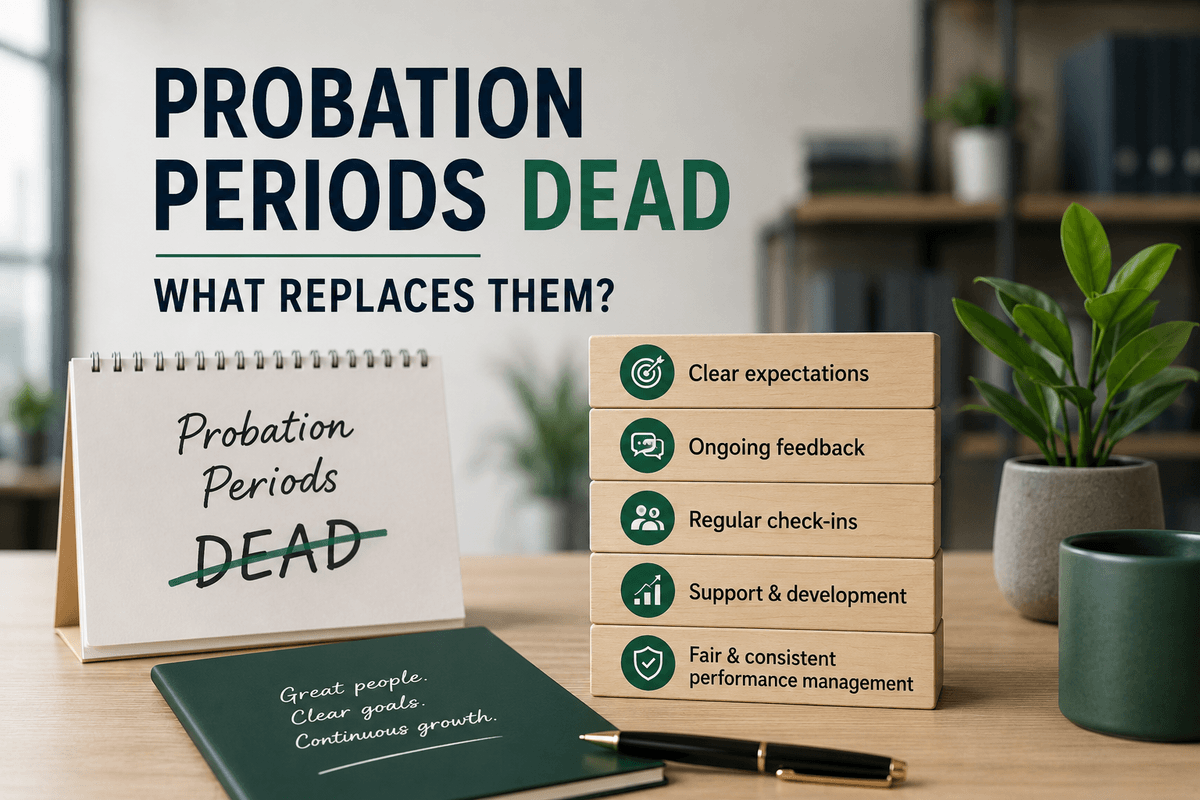
Probation Periods Are Dead. Here's What Replaces Them.
I was sitting with the owner of a 40-person fit-out company in Birmingham last week. He'd just let someone go at month five, well within the standard six-month probation. Clean process, on paper. Then he asked me, almost as an afterthought: "That probation thing still works, right?"
It doesn't. Not the way he was using it.
The two-year qualifying period for unfair dismissal claims is going. Day-one protection is replacing it. And the cultural muscle memory most SMEs have built around "probation" — the idea that the first six months are a low-risk window where you can part ways without much process — that muscle memory is now actively dangerous.
What "Probation" Actually Meant
Be honest about what probation has done for most small businesses. It's been a permission slip. A signal to managers that the formal stuff (PIPs, written warnings, documented feedback) doesn't really apply yet. You could have an awkward conversation, agree it wasn't working, and move on.
That worked because the legal backstop made it work. Without two years of service, an unfair dismissal claim was off the table for most people. Probation was the soft layer on top of a hard legal floor.
The floor's gone.
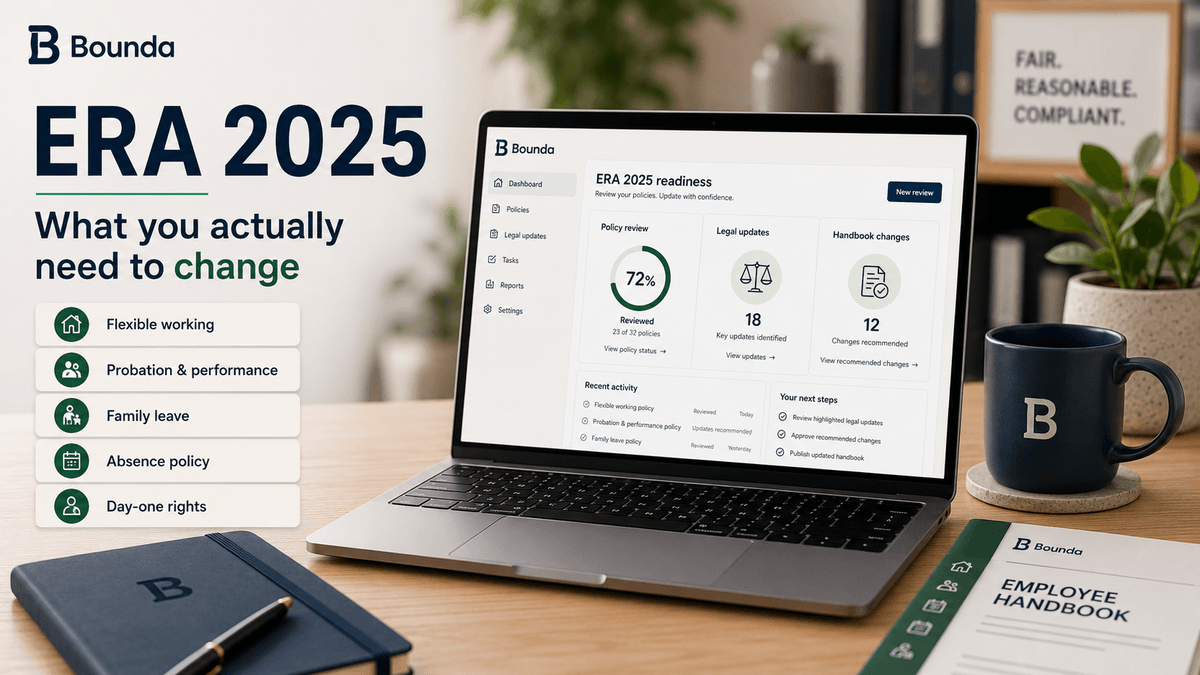
This change is one of several rolling out under the Employment Rights Act 2025, the biggest single piece of UK employment law reform in over a decade.
What Replaces It
Statutory probationary periods. The new framework introduces a lighter-touch dismissal process during an initial period (currently expected to be nine months, though the regulations will set the final figure), with a simplified standard of fairness. It's not a free pass. It's a different test.
Three things change in practice.
For the full action list of what to update across your handbook under the new regime, see our practical ERA 2025 write-up.
1. Written Feedback From Day One
Written feedback becomes non-optional from day one. Verbal check-ins are still useful, but if you part ways at month four, you need a paper trail showing the role wasn't working and the employee knew it. "We just didn't click" stops being a defence.
2. Structured Dismissal Meetings Early On
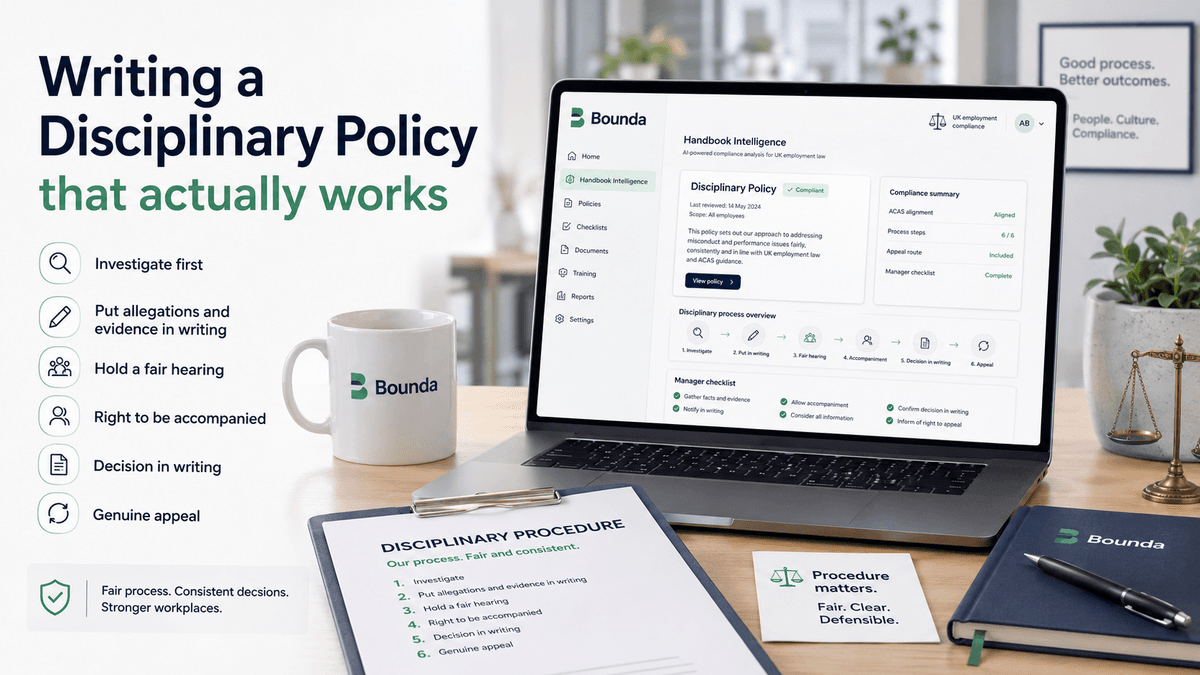
The dismissal meeting itself needs structure even in the probationary window — right to be accompanied, written reasons, an appeal route. Get the disciplinary procedure right and this becomes lower friction; get it wrong and probation-period dismissals fail at tribunal more often than they used to. Not the full capability process, but not nothing.
3. Contract Language
The language in your offer letters and contracts has to change. "Subject to a six-month probationary period" is now a half-sentence that creates more problems than it solves. You need explicit reference to the statutory framework and what it means for both parties.
What Good Looks Like in 2026
- A probation framework with three checkpoints, not one — month one (settling in), month three (formal review with written notes), month six or seven (decision point with two weeks' notice if needed).
- A simple feedback log for managers. Not an HRIS, not a system — just a shared note per hire that captures the conversations. Tribunals love contemporaneous notes. Memory is worthless.
- Clear criteria for "not working out." If you can't write down what success looks like in this role, you can't fairly conclude someone's failed at it.
The Honest Take
The companies that handle this well in 2026 won't be the ones with the slickest policy documents. They'll be the ones whose line managers actually run the conversations. Policy is the easy part. Manager capability is where most SMEs are going to get caught out, and no software fixes that for you.
If your handbook still treats the first 12 months as a probation-grade soft zone, the legally required policies are no longer enough on their own to carry the procedural weight.
Bounda will tell you whether your probation language is current. It won't make your operations manager braver. That bit's on you.