How to Handle a Flexible Working Request: The Step-by-Step Process
Most flexible working policies were written before April 2024. Most are now wrong on at least one point. This is the practical step-by-step process for handling a request under the rules as they stand in 2026, with the eight statutory refusal grounds and what each one needs you to demonstrate.
If you want the editorial take on why most refusals fail tribunal, that's our companion piece: The Flexible Working Request You Can't Legally Refuse Anymore.
For the wider ERA 2025 picture, see our Employment Rights Act 2025 guide and practical action list.
What Changed (Quick Reference)
Before April 2024
- Employees needed 26 weeks' service to request
- Could make one request per year
- Employer had 3 months to respond
Now (2026)
- Day-one right to request
- Two statutory requests per 12-month period
- Employer has 2 months to respond
- Must consult before refusing
The Process
Step 1: Receive the Request
A statutory flexible working request must be in writing. It should specify the change requested, the proposed start date, and any previous requests in the last 12 months.
What to do:
- Log the request date immediately — the two-month clock starts here
- Confirm it meets the statutory criteria (written, specific change, start date, prior requests noted)
- Send an acknowledgement within 14 days (not statutory, but sets tone and accountability)
- Assign a named owner for the process (HR or line manager, depending on your structure)
What to avoid:
- Treating a verbal conversation as a statutory request without documenting it
- Ignoring informal requests entirely — you can decline to run the formal process, but document why
- Missing the acknowledgement window and losing internal momentum
If the request is informal or verbal, you can treat it as informal, but document the conversation. Informal arrangements do not count toward the statutory two-per-12-months limit.
Suggested acknowledgement wording:
Thank you for your flexible working request received on [date]. I confirm I have received it and will respond within two months in line with statute. I will be in touch to arrange a consultation meeting within 14 days.
Step 2: Consider the Request
Before the consultation meeting, do your internal homework. "Consider properly" means looking at feasibility, alternatives, and partial accommodation — not deciding in advance.
What to do:
- Ask: can this be trialled? Is there an alternative arrangement? What is the genuine business impact?
- Review role requirements, team coverage, customer demand, and systems access
- Note what evidence you would need if you later rely on a statutory refusal ground
- Record your preliminary assessment — assumptions do not survive tribunal scrutiny
What to avoid:
- Pre-deciding the outcome before consultation
- Relying on "we've never done it that way" without business evidence
- Skipping internal review because the request "obviously" cannot work
Step 3: Consult
This is the most important step. Before refusing, you must consult with the employee. Refusing without a documented consultation meeting is the single most common reason flexible working refusals lose at tribunal.
What to do:
- Send a written invitation with date, time, location or video link
- Confirm the right to be accompanied by a colleague or trade union representative
- Share an agenda in advance (proposed changes, impact, alternatives, trial options, timeline)
- Run a genuine two-way conversation — not a delivery of a pre-made decision
- Consider alternatives the employee suggests in good faith
- Take contemporaneous meeting notes and file them
What to avoid:
- A "consultation" that is really notification of a refusal already made
- No agenda, no notes, no follow-up
- Dismissing trial periods or partial arrangements without discussion
Step 4: Respond Within 2 Months
The two months runs from the date of the request, including any appeal. Late responses are deemed agreement to the request.
What to do:
- Diarise the deadline at receipt and set internal reminders at 4 and 6 weeks
- Issue a written response: decision, statutory ground if refused, and reasoning
- If approved, confirm the variation to contract (and trial period terms if applicable)
- If refused, offer the appeal route in writing
What to avoid:
- Verbal-only outcomes
- Missing the deadline — deemed acceptance is not theoretical
- Refusals that cite a ground but give no evidence-backed reasoning
Suggested approval wording:
Following our consultation meeting on [date], I am pleased to confirm your flexible working request is approved. The change will take effect from [start date]. This is a permanent variation to your contract unless we have agreed a trial period.
Suggested refusal wording:
Following our consultation meeting on [date], I have concluded that your request cannot be accommodated. The decision is based on [statutory ground]. The reasoning is: [two or three sentences with specific evidence]. You have the right to appeal within 14 days.
Step 5: Accept or Refuse (The Eight Statutory Grounds)
If refusing, you can only rely on one of these eight grounds. A ground without evidence is not defensible.
- Burden of additional costs — cost analysis with figures
- Detrimental effect on ability to meet customer demand — customer feedback, service-level data, demand patterns
- Inability to reorganise work among existing staff — documented attempt to reorganise
- Inability to recruit additional staff — recruitment history, market data
- Detrimental impact on quality — quality metrics, evidence of dependencies
- Detrimental impact on performance — performance data showing the role requires what is not available remotely or part-time
- Insufficiency of work during proposed working periods — workload data
- Planned structural changes — documented planning, board minutes or similar
The test is whether you took the request seriously and tested your reasons — not whether you were ultimately right.
Templates You Can Use
Acknowledgement template (Day 0–14)
Subject: Your flexible working request
Thank you for your flexible working request received on [date]. I confirm I have received it and will respond within two months in line with statute. I will be in touch to arrange a consultation meeting within [14 days].
Consultation invitation template
Subject: Flexible working consultation meeting
I would like to invite you to a consultation meeting to discuss your flexible working request. The meeting is scheduled for [date and time] at [location/video link]. You have the right to be accompanied by a work colleague or trade union representative if you wish.
The agenda will cover:
- Your proposed changes and the reasoning
- The potential impact on the role and the team
- Alternative arrangements or trial periods that might work
- Next steps and timeline for decision
Please confirm attendance and let me know if you'll be accompanied.
Approval response template
Subject: Outcome of your flexible working request
Following our consultation meeting on [date], I am pleased to confirm your flexible working request is approved. The change will take effect from [start date]. This is a permanent variation to your contract of employment unless we have agreed a trial period (see below).
[If trial period: We have agreed a [3-month] trial period beginning [date]. We will review the arrangement on [review date]. If the trial is successful, the change becomes permanent. If issues arise, we will discuss them and may revert to your previous working pattern.]
Refusal response template
Subject: Outcome of your flexible working request
Following our consultation meeting on [date], I have concluded that your flexible working request cannot be accommodated. The decision is based on the following statutory ground: [statutory ground name from the eight].
The reasoning is: [specific evidence-backed explanation — two or three sentences].
You have the right to appeal this decision within 14 days. To appeal, please respond in writing setting out your reasons.
Manager's checklist (for reference)
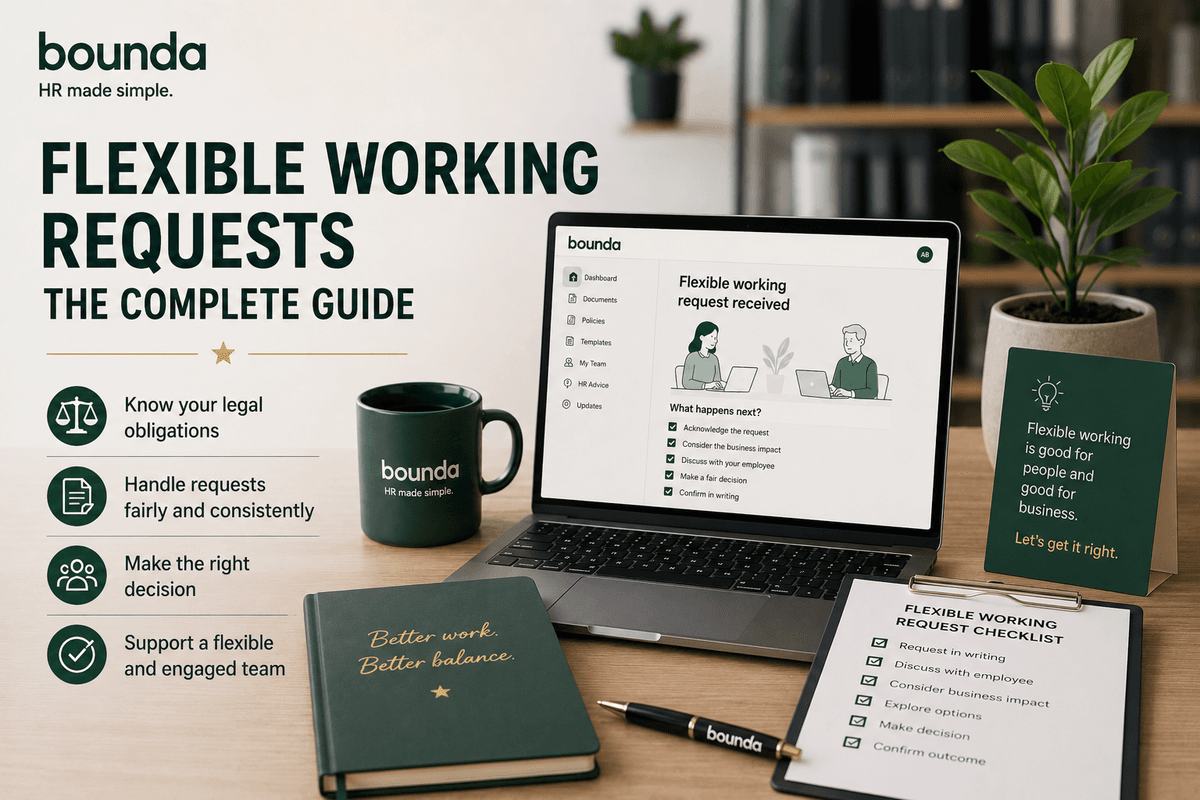
- Request received in writing and acknowledged within 14 days
- Statutory request (not informal request) confirmed
- Internal review of feasibility completed
- Consultation meeting scheduled and held
- Meeting notes documented
- Decision made and communicated within 2 months
- Evidence supporting any refusal documented and filed
- Variation to contract issued (if approved) or appeal route offered (if refused)
When the process isn't enough
This post is the operational walkthrough. The harder question — what to do when the consultation requirement keeps producing refusals that don't stand up — is in our companion piece: The Flexible Working Request You Can't Legally Refuse Anymore.
Common questions about flexible working requests
Is flexible working a day-one right in 2026?
Yes. Since 6 April 2024, employees have had a day-one right to request flexible working. The previous 26-week qualifying period is gone. ERA 2025 reinforces this and adds additional employee protections.
How many flexible working requests can an employee make per year?
Two statutory requests per 12-month period. The 12 months runs from the date of the first request, not the calendar year. Requests above this count are not statutory and you are not obliged to consider them under the formal process (though it may be good practice to do so).
What if I don't respond within two months?
The request is deemed to have been accepted. Treat the two-month deadline as the single hardest constraint in the process and build internal reminders accordingly.
Do I have to allow remote work from another country?
Not necessarily, but you have to engage with the request properly and refuse only on documented business grounds. Tax residency, immigration, data protection, and employer-of-record issues are all legitimate factors, but you need to demonstrate them rather than assert them.
What's the difference between a flexible working request and a reasonable adjustment?
A reasonable adjustment under the Equality Act 2010 is a separate statutory duty triggered when a disability puts an employee at a substantial disadvantage. The two can overlap (an employee with a disability may request flexible working that's also a reasonable adjustment), but they are different routes with different legal tests. Treat them with appropriate care if both apply.